
The Gift You Unwrap Slowly
Elijah’s conclusion was simple and sharp: “Forgiveness isn’t letting evil win. It’s refusing to become evil because you were wounded.”
Elijah’s conclusion was simple and sharp: “Forgiveness isn’t letting evil win. It’s refusing to become evil because you were wounded.”

Jeremiah drew the line God draws: “Be angry, and yet do not sin… do not let the sun go down… and do not give the devil an opportunity” (Ephesians 4:26–27).

Gossip never walked into The Shepherds Cafe wearing boots. It wore slippers—quiet, familiar, and comfortable enough to pass as “just talking.”
The phrase sounded harmless—almost noble: “But it’s a good work.” Yet Elijah knew that one sentence can quietly replace God’s authority with human enthusiasm.
Elijah said what many think but won’t admit: “Some people mistake intensity for guidance. A strong feeling isn’t the same thing as a sure word.”

“People think older Christian men outgrow struggle,” Elijah admitted. “But the battlefield doesn’t disappear. It just changes terrain.”

“He moved slower than last week—not just in his knees, but in the way his eyes scanned the room as if he were unsure whether he belonged there anymore.”
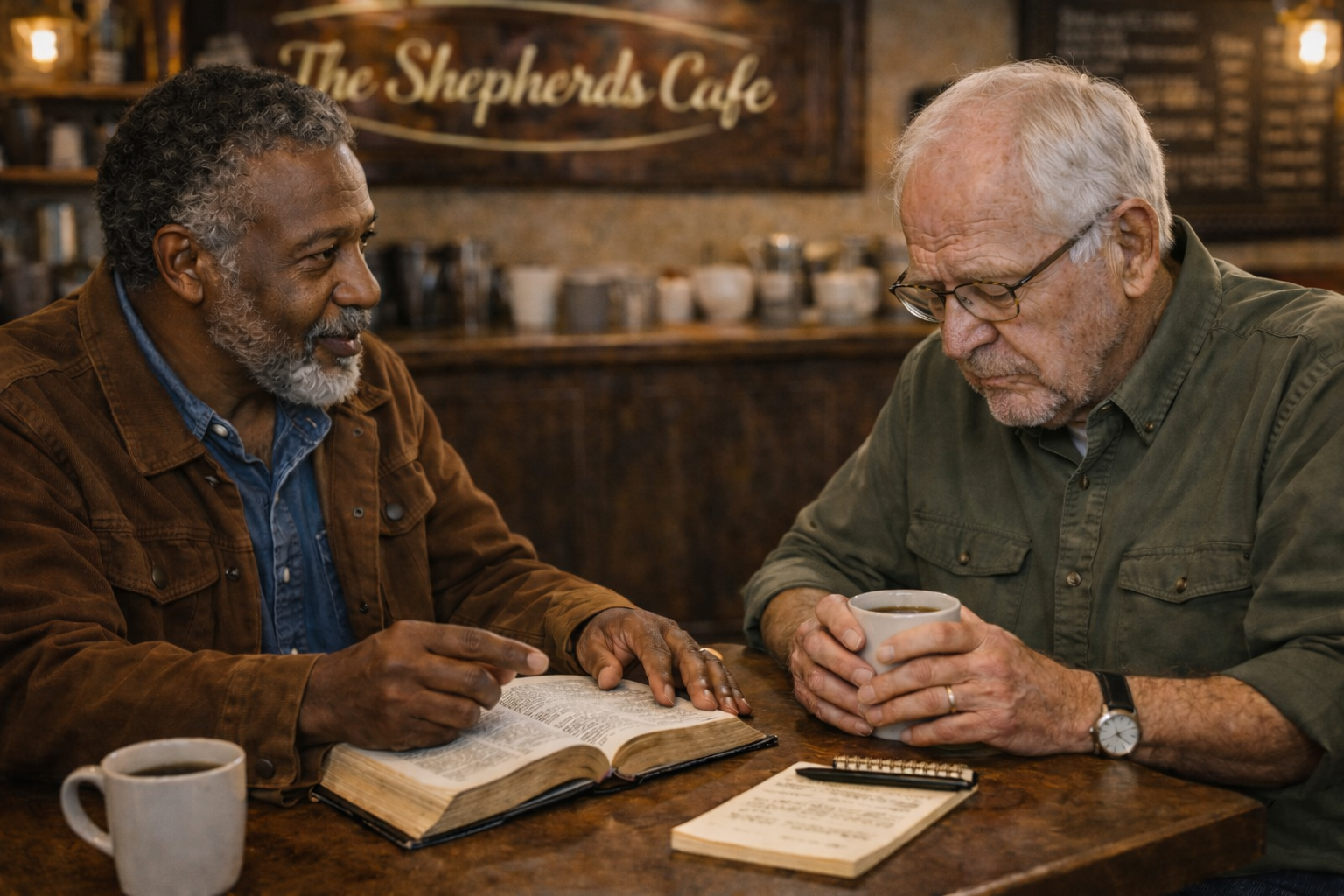
“In Christ, you don’t retire. You remain faithful until the departure comes.”

“God does not forget. People forget. God doesn’t.”

Training defined
“Spiritual exercise isn’t mystical. It’s repeated obedience—especially when you don’t feel like it.”