The late-afternoon sun poured through the windows of The Shepherds Cafe like it was trying to warm every hard conversation in the room. Barbara had just refilled a few mugs when she noticed a woman near the window staring into her cup—eyes focused, mind somewhere else.
Elijah sat beneath the café’s wooden sign, glasses low, phone in hand. Jeremiah slid into the booth across from him, Bible open before the coffee even arrived.
Elijah didn’t ease into it. “Same topic—two sources,” he said, turning the screen.
BibleTalk.tv: “The Gift of Forgiveness” The Christian Post: “How to forgive even the person who killed mother”
Barbara’s mouth tightened. “Forgiveness is the word people love—until it costs them something.”
Jeremiah nodded. “That’s because forgiveness isn’t sentiment. It’s surrender.”
Elijah read from the BibleTalk devotional and summarized it simply: forgiveness is not a small accessory in the Christian life. It is a gift purchased at the cross, meant to be received with gratitude and treated with reverence.
Jeremiah tapped the open Bible. “Peter puts it bluntly: ‘He Himself bore our sins in His body on the cross…’ (1 Peter 2:24). Forgiveness is expensive.”
Barbara glanced toward the woman at the window, then back to the booth. “But when the hurt is deep,” she said, “people think forgiveness means letting evil walk free.”
Elijah nodded and lifted the second article again. “That’s why this Christian Post story is so heavy. It’s about forgiving the person who killed a mother—how that kind of forgiveness wasn’t a feeling, it was a choice formed by receiving God’s forgiveness first.”
The woman near the window finally spoke—quiet, controlled. “I can forgive small things,” she said. “But some things feel… permanent.”
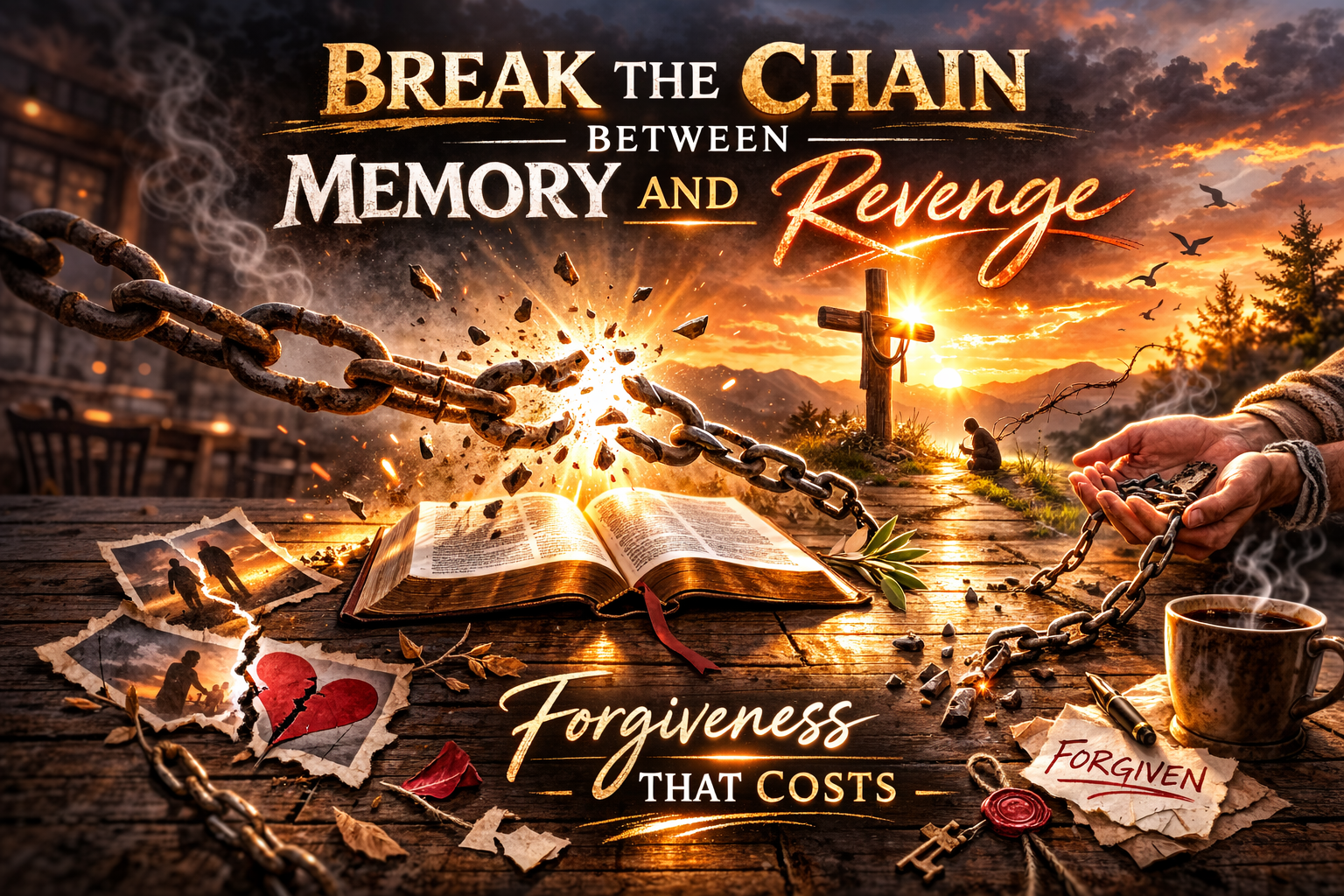
Jeremiah didn’t rush her. “They are permanent in memory sometimes. Forgiveness doesn’t erase memory. Forgiveness breaks the chain between memory and revenge.”
Barbara stepped closer—not to pry, just to steady. “Forgiveness doesn’t cancel consequences,” she said. “It cancels your right to pay them back.”
Elijah folded his hands. “BibleTalk describes forgiveness like a gift you actually unwrap and examine—because many people say they believe in it, but they live like they’re still trying to earn it or still trying to punish themselves.”
Jeremiah nodded. “And that’s where the gospel becomes practical: if God forgave you at your worst, you can’t keep a throne in your heart for vengeance.”
He opened to a familiar command that never gets easier: “Be kind to one another… forgiving each other, just as God in Christ also has forgiven you.” (Ephesians 4:32)
The woman swallowed. “So how do you forgive… when you don’t feel safe?”
Jeremiah answered carefully. “You separate forgiveness from trust. Forgiveness is granted because God commands it. Trust is rebuilt over time—or not rebuilt at all if it isn’t wise. Forgiveness does not mean you invite harm back into your life.”
Barbara added, “A boundary is not bitterness. It’s wisdom.”
Elijah leaned forward. “And you also separate forgiveness from pretending. Forgiveness is not saying, ‘It didn’t matter.’ Forgiveness is saying, ‘I will not become a worse person because of what you did to me.’”
Jeremiah looked at the woman and gave her a path—not a slogan.
Name it truthfully. No minimizing, no rewriting. Release retaliation. ‘Never pay back evil for evil…’ (Romans 12:17–19). Hand justice upward. God sees perfectly; human justice can be incomplete, but God’s isn’t. Ask God for help daily. Forgiveness is often repeated—especially when the memory reappears. Pursue reconciliation only if it is biblical and safe. Forgiveness can be one-sided; reconciliation requires repentance and change.
Barbara watched the woman’s shoulders drop a fraction—like someone who had been holding a weight wrong for years.
Elijah’s voice softened. “That Christian Post story makes a point a lot of people miss: once you’ve received God’s forgiveness, it changes what you believe is possible. Forgiveness becomes something you can actually do—not because you’re tough, but because you’re freed.”
Jeremiah closed his Bible gently. “Forgiveness is a gift,” he said. “First from God to us. Then through us to others. Not because they deserve it—but because we refuse to let bitterness disciple us.”
Barbara nodded once. “And because a heart that won’t forgive eventually turns into stone.”
The café didn’t clap. It never did. But the room felt quieter in a different way—like a door had opened where a wall used to be.
And as the sun lowered, the lesson stayed where it belonged: forgiveness isn’t weak. Forgiveness is what keeps a wounded soul from becoming a dangerous one.