
Part 2 — The Definition We Avoid
“We’ve told ourselves sacrifice is what you do when you’ve got extra,” Elijah said. “But Scripture describes sacrifice as what you do when you don’t have extra—and you choose love anyway.”
“We’ve told ourselves sacrifice is what you do when you’ve got extra,” Elijah said. “But Scripture describes sacrifice as what you do when you don’t have extra—and you choose love anyway.”

The bell over the door of The Shepherds Cafe chimed softly, and Barbara stepped into warmth that smelled like coffee and cinnamon. Elijah sat at the window table with his notebook open—untouched—like he’d been waiting on a conversation more than a thought.
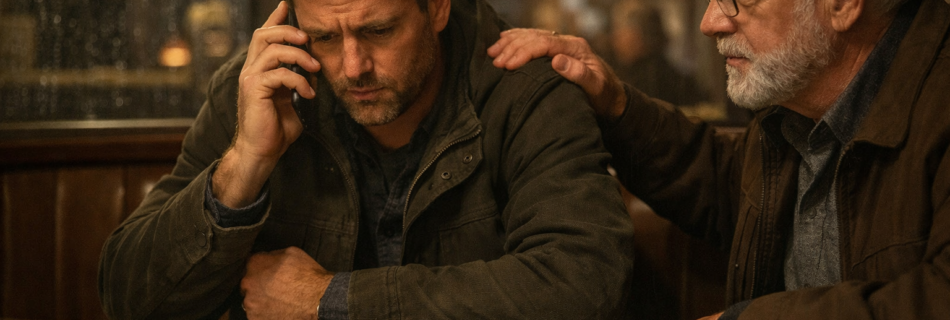
“Caleb,” Elijah said, low and steady, already on his feet. “Look at me.”
Caleb’s eyes found his like a man grabbing a railing in a storm.
“Breathe,” Elijah said. “We’re going. But we’re going with control. Your kids need you steady.”

Caleb Mercer walked into The Shepherds Cafe wearing the kind of exhaustion that doesn’t come from long hours—only from long sorrow. His coffee was black, his hands shook, and the wedding band on his finger looked heavier than it should.

Barbara didn’t doom-scroll. She didn’t argue online. She simply turned her phone face down, pulled a sheet of paper toward her, and wrote the sentence that kept coming back like a warning: A Republic Can’t Run on Lies.

Barbara slid her phone across the table at The Shepherds Cafe. “I’m tired of narratives replacing truth,” she said. Elijah and Jeremiah didn’t rant. They opened Scripture and built a simple filter for every headline.

Hannah didn’t come to The Shepherds Cafe for coffee. She came because rebellion had started to feel like the default setting of the world—and she was raising three children alone. “I need clear lines,” she told Barbara. “Biblical lines. Not ‘mom is in a mood’ lines.”

The studio lights were hot, but the air felt sterile. Dr. Lena Hart had delivered babies, managed hemorrhages, and spoken hard truths to grieving families—yet one simple question tightened her throat like a tourniquet: “Can men get pregnant?” The silence that followed wasn’t medical. It was cultural. And it was louder than any answer.

“He set his hand on the envelope like you’d steady something that could tilt a whole room.”

“The truth takes a minute. Love takes longer. But both are worth it.”