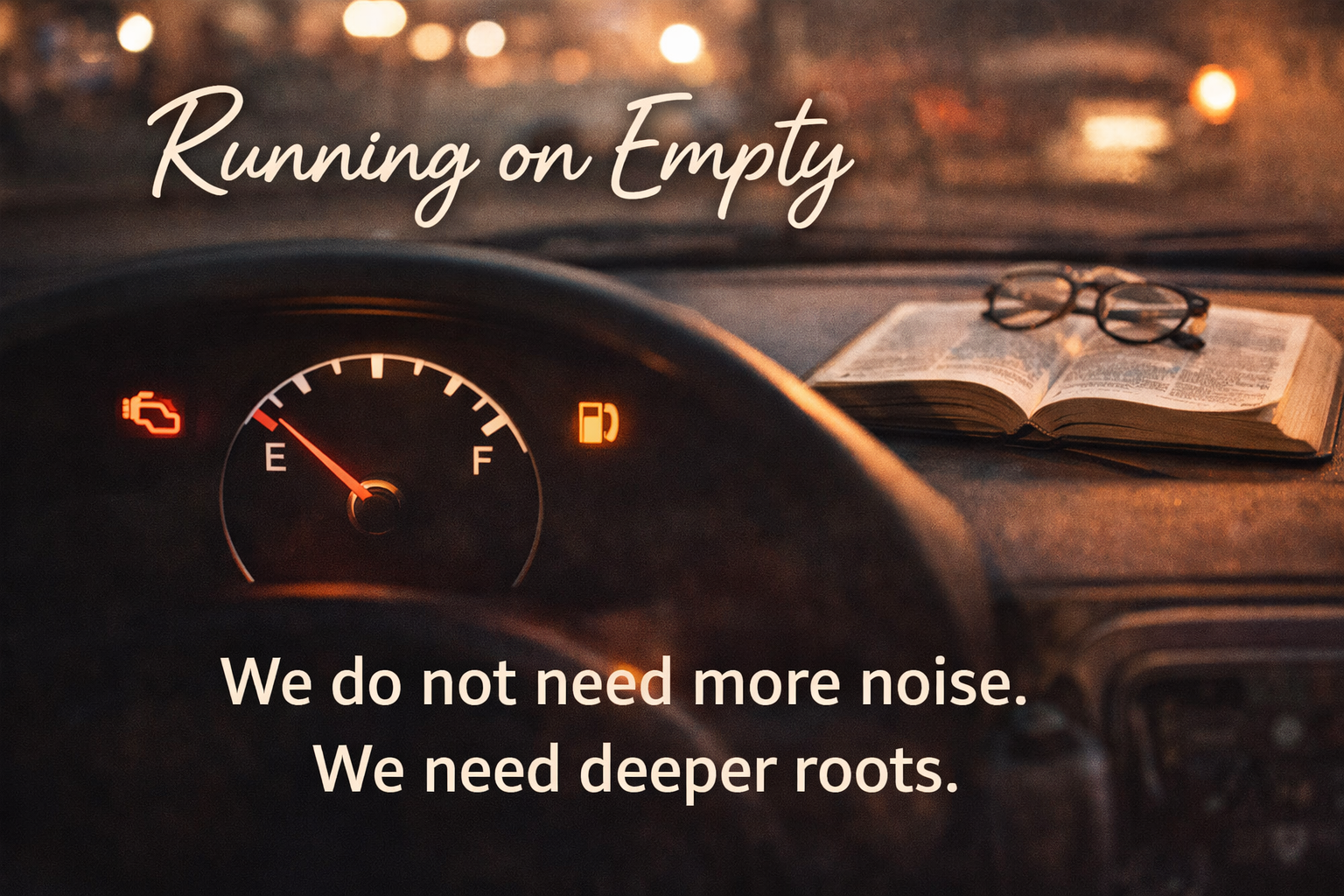
The dinner rush at The Shepherds Cafe had just passed, leaving the place in that pleasant in-between hour when the tables were half full, the coffee was still fresh, and the conversations seemed to slow down enough to matter. The windows reflected the amber light from outside. Dishes clinked softly behind the counter. A low jazz piano drifted through the room.
Jeremiah sat first that evening, one hand around a warm mug, the other resting on a closed Bible. Elijah arrived a few moments later, carrying a folder under his arm and wearing the look of a man who had spent too much of the day solving other people’s problems. Barbara came in last, scarf draped neatly around her shoulders, tea in hand, and studied both men before she sat down.
“You two look tired,” she said.
Jeremiah gave a dry smile. “That obvious?”
“Elijah looks like he has been calculating something since sunrise,” Barbara replied. “And you look like you’re too tired to complain, which is how I know it’s serious.”
Elijah exhaled and set the folder on the table. “It has been one of those days. Too many needs. Too many tasks. Too many things that feel urgent.”
Jeremiah nodded. “That’s the world now. Everybody is exhausted. Even people who cannot explain why they’re exhausted.”
Barbara stirred her tea. “Because many are living with no margin. No rest. No stillness. No prayerful quiet. Just one thing after another until they are spiritually running on fumes.”
Jeremiah leaned back. “That phrase fits. Running on empty.”
Elijah opened his Bible. “And some do not realize how dangerous that is. A car running on empty eventually stops. A Christian running on empty becomes vulnerable. Discouragement hits harder. Temptation looks stronger. Small problems feel massive.”
Barbara looked thoughtful. “And emptiness is not always caused by rebellion. Sometimes it comes from neglect. We mean to pray, but postpone it. We mean to read, but delay it. We mean to slow down, but never do. Then we wonder why our hearts feel thin.”
Jeremiah nodded. “That’s right. Most spiritual collapse does not begin with a dramatic public sin. It often begins quietly. A neglected soul. A tired mind. A heart that has not sat with God in too long.”
Elijah turned a page and said, “‘Come away by yourselves to a secluded place and rest a while’” (Mark 6:31, NASB). Even the disciples needed that instruction. Rest was not weakness. Withdrawal for renewal was not laziness. The Lord knew that constant output without replenishment was not sustainable.”
Barbara smiled faintly. “That is a needed word. Some people wear exhaustion like a badge of honor. They almost seem proud of having no time to breathe.”
Jeremiah chuckled. “Yes. We’ve turned burnout into a status symbol.”
Elijah adjusted his glasses. “But Scripture does not glorify burnout. It calls for faithfulness, endurance, prayer, self-control, and wisdom. Those things require spiritual nourishment.”
At the counter, a woman fumbled for her wallet while trying to manage two small children at once. One child was whining. The other was dropping napkins on the floor. Barbara watched quietly for a moment.
“She looks overwhelmed,” Barbara said softly.
Jeremiah glanced over. “A lot of people do. And the sad part is, some feel guilty for being tired, as if fatigue itself is a moral failure.”
Elijah nodded. “There is a difference between lazy neglect and human limitation. We are creatures, not machines. Psalm 103 says, ‘He Himself knows our frame; He is mindful that we are but dust’” (Psalm 103:14, NASB). God does not forget that we are finite, though we often do.”
Barbara leaned forward. “That may be part of the problem. We are trying to live as though we have no limits. We fill every moment, answer every alert, chase every demand, and then give the Lord the leftovers.”
Jeremiah raised his mug slightly. “And leftovers do not build strong disciples.”
Elijah said, “No. The inner man must be strengthened. Jesus said, ‘Abide in Me’ (John 15:4, NASB). Abiding is not a rushed glance at truth. It is remaining. Dwelling. Continuing in Him.”
Barbara smiled. “Abiding sounds simple until you try to do it in a noisy life.”
Jeremiah laughed. “That’s because modern life is built to keep people distracted. Silence feels unusual now. Reflection feels rare. Some people are terrified of stillness because stillness gives truth room to speak.”
Elijah closed his Bible for a moment and rested his hand on it. “Then that is exactly why stillness is needed. We do not need more noise. We need deeper roots. We need to pray before panic becomes our default. We need Scripture before opinion floods the mind. We need worship before the week drains us dry.”
Barbara looked from one man to the other. “So how does a person know when they are running on empty?”
Jeremiah answered first. “When little irritations feel huge. When prayer feels distant. When joy feels mechanical. When worship becomes motion without heart. When you are doing Christian things without drawing near to Christ.”
Elijah added, “And the answer is not merely a vacation, though rest has its place. The deeper answer is renewal in God. Isaiah says, ‘Yet those who wait for the Lord will gain new strength’” (Isaiah 40:31, NASB). Not those who admire strength. Not those who talk about strength. Those who wait for the Lord.”
Barbara wrote the verse in her notebook. “That is the line, then. Real renewal is not found in escaping life, but in returning to God.”
Jeremiah smiled. “That’ll preach in a café.”
Elijah gave him a side glance. “Nearly anything sounds profound once coffee is involved.”
Barbara laughed. “That may be the truest thing said all evening.”
The three of them sat quietly for a moment as the piano music continued in the background and warm light stretched across the table. Outside, the world kept moving at full speed. Inside The Shepherds Cafe, the lesson settled gently but firmly: a soul cannot run indefinitely on empty. Sooner or later, every disciple must slow down, draw near, and be filled again by the One who gives strength to the weary.
You do not honor God by pretending you never run low; you honor Him by going back to the source of true strength.