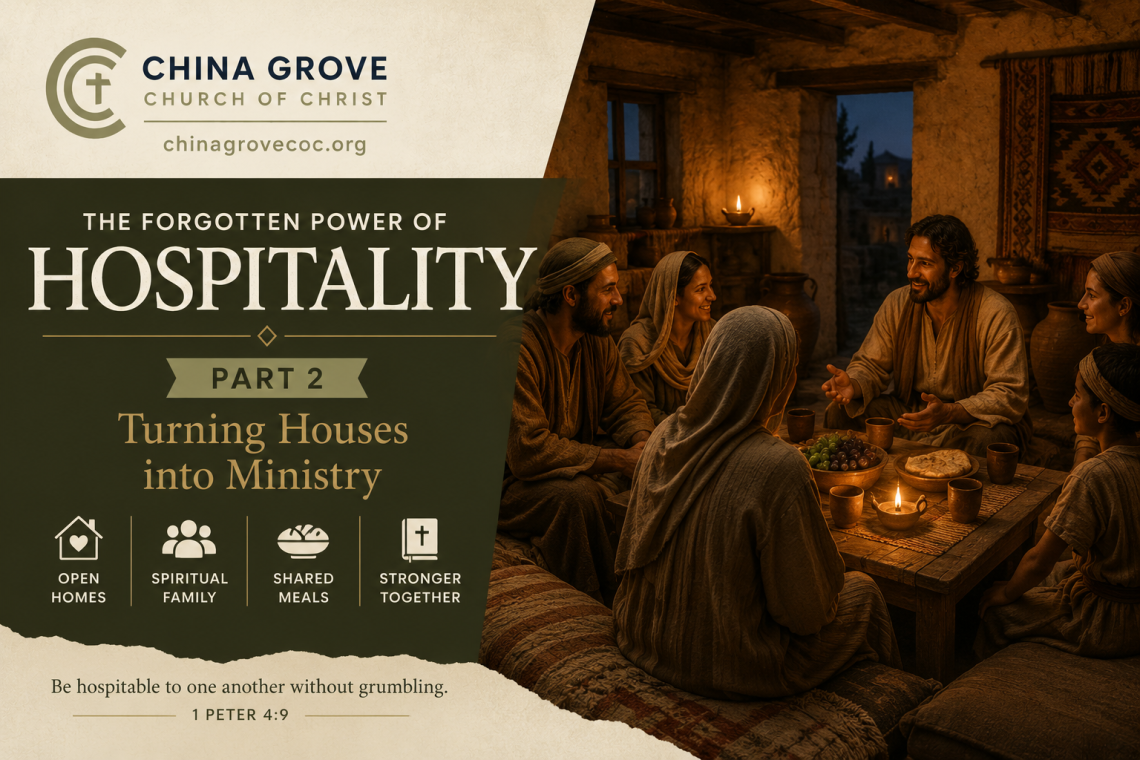
Turning Houses into Ministry
Hospitality in Scripture was never merely about food, decorations, or social gatherings. It was about making room for people.
That remains one of the quiet powers of hospitality even now.
Walls still fall around tables.
Some of the most meaningful spiritual conversations do not happen in auditoriums. They happen over coffee, during simple meals, or sitting in a living room after a difficult week. Hurting people often speak honestly in homes long before they speak openly in crowds.
Hospitality creates room for discipleship.
It creates room for encouragement.
It creates room for healing.
And importantly, biblical hospitality never depended on wealth.
Many first-century Christians were poor. Some had already suffered loss because of persecution. Yet they still shared what little they possessed. Hospitality often meant making room when there barely seemed to be enough room to begin with.
That spirit appears in Lydia’s story in Acts 16. After obeying the gospel, she immediately urged Paul and his companions to stay in her home. Her house became a place of support and encouragement for believers.
Throughout Scripture, ordinary homes quietly became centers of ministry.
That truth matters today because modern culture trains people to guard their privacy, protect their schedules, and retreat into isolation. Homes increasingly function like fortresses instead of places of fellowship. Entertainment fills evenings while relationships slowly weaken.
But Christians are called to something different.
Romans 12:13 commands believers to be “practicing hospitality.” Hebrews 13:2 says, “Do not neglect to show hospitality to strangers.”
Those commands are not describing performance.
They describe open hearts.
A simple invitation matters.
A shared meal matters.
Checking on someone matters.
Welcoming visitors matters.
Making room for struggling Christians matters.
These acts may seem small, but they communicate something powerful in an isolated world: “You are not alone here.”
Modern Christians often ask how churches become stronger and discipleship becomes deeper. The answer may involve rediscovering something the early Christians understood well.
Real hospitality is more than friendliness.
It is love willing to make room for others — even when it costs something.