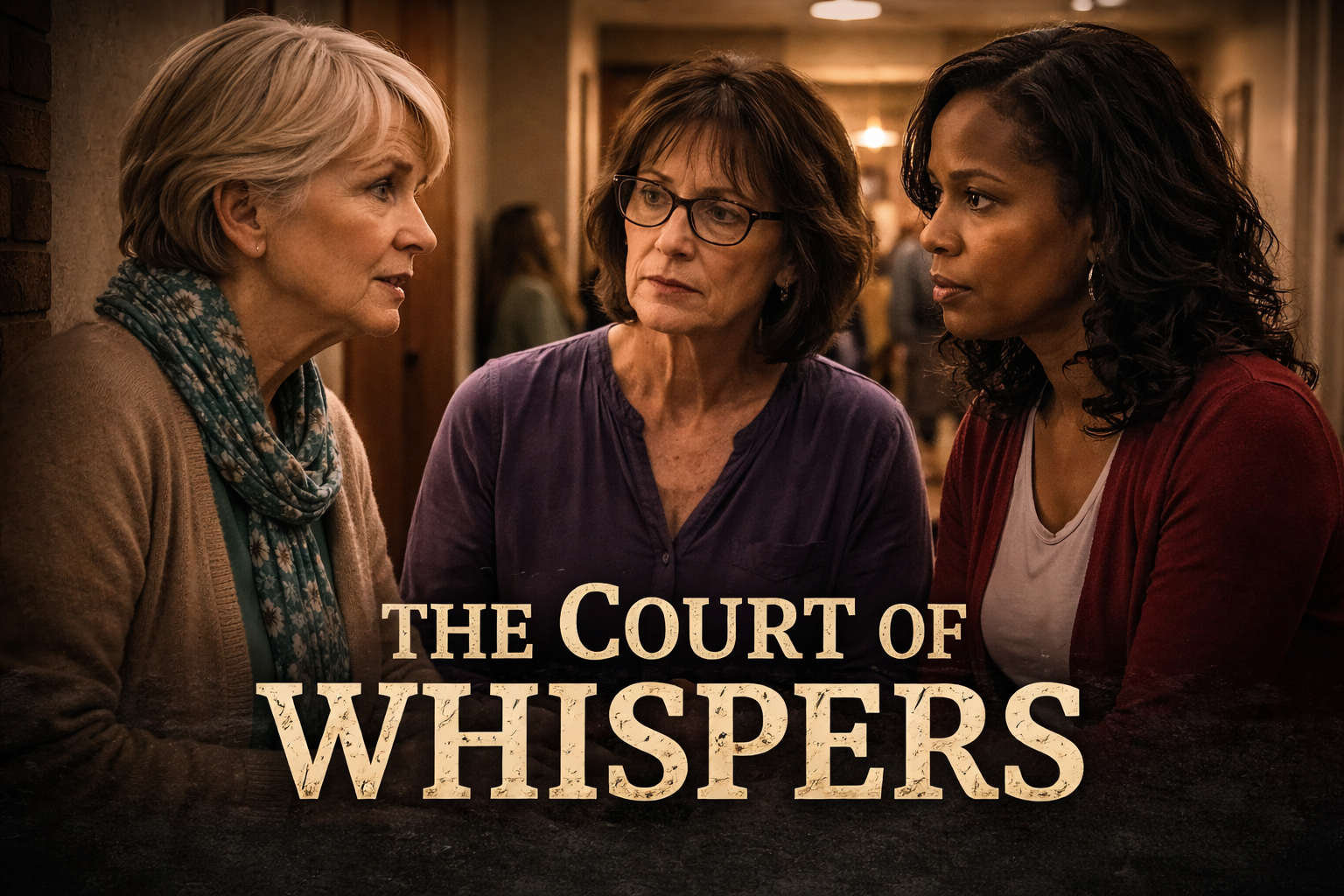
Barbara didn’t realize anything was wrong until she felt the room get quiet around her.
It happened after the Sunday morning assembly, in that narrow hallway where people lingered and exchange updates that sound harmless until you can tell they aren’t. Barbara had stepped aside to let a family pass when she heard her name—softly—followed by a pause that wasn’t friendly.
She turned and saw Denise Carter standing with two other women. Denise was Barbara’s friend—close enough that she could call her a girlfriend without anyone misunderstanding what she meant. They had cooked for each other during illnesses. They had swapped rides. They had prayed together. Denise was not a casual acquaintance.
But Denise’s smile didn’t reach her eyes.
Barbara walked up calmly. “Hey, Denise. You okay?”
Denise’s voice came out controlled. “I’m fine. Just… surprised.”
Barbara didn’t ask, “What’s wrong with you?” She asked the right question. “Surprised about what?”
Denise glanced at the other women, then back at Barbara. “I heard you said some things about me. About how I handle my kids. That I’m ‘soft.’ That I’m… letting the world in.”
The hallway felt warmer. Barbara’s chest tightened—not because she was guilty, but because she recognized the pattern. A thirdhand statement. A conclusion. A cloud.
Barbara kept her face steady. “Denise, I haven’t said that.”
Denise’s eyes narrowed. “That’s not what I heard.”
Barbara could have done what most people do—defend herself loudly, right there, and recruit witnesses. She could feel the temptation: clear your name, win the moment, make the other person look unreasonable.
Instead, Barbara did something that felt almost unnatural in modern life.
She lowered her voice and said, “Can we talk privately? Right now?”
Denise hesitated. “Why? So you can explain it?”
Barbara’s tone was firm, gentle. “So we can obey Jesus.”
That landed. Denise didn’t look pleased, but she nodded. “Fine.”
They stepped into an empty classroom. Barbara closed the door, not to hide, but to protect. Protect Denise from being discussed. Protect the church from becoming a rumor exchange. Protect the truth from being shaped by spectators.
Barbara didn’t start with a speech. She started with clarity.
“Denise, I want to ask you something,” Barbara said. “Who did you hear this from?”
Denise’s jaw tightened. “I’m not trying to start trouble.”
Barbara nodded. “I’m not asking to punish anyone. I’m asking because Matthew 18 starts with going to the person—directly. That’s what you’re doing right now, and I respect you for it. But if there’s been sin in speech—if someone is spreading claims without verifying—that’s not small. That’s dangerous.”
Denise looked down. “It was from… someone who said they heard you mention me after the women’s Bible class last week.”
Barbara let that sit for a second. Then she said, “Here’s the truth: last week, you asked me for prayer about Ethan. You said he’s been pushing boundaries. I told you I’d pray. I also told you—because you asked—that consistency matters. But I did not call you soft. I didn’t mock you. I didn’t talk about you to others.”
Denise’s eyes flicked up. “So you didn’t say I’m letting the world in?”
Barbara’s voice stayed measured. “I did not.”
Denise’s shoulders sagged slightly—relief mixed with embarrassment. “Then why would someone say you did?”
Barbara didn’t immediately answer, because she wanted Denise to see something: the problem wasn’t just the rumor. The problem was how quickly it spread and how easily it was believed.
Barbara said it plainly. “Because gossip gives people a shortcut. They get to feel informed without doing the hard work of truth.”
Denise swallowed. “I should have come to you first.”
Barbara nodded. “And you did. That’s what matters.”
Denise looked away. “But it still hurt. I’ve been carrying it for two days. I’ve been replaying it. I’ve been… angry.”
Barbara softened. “That’s why Jesus gave Matthew 18. Private offense is supposed to be handled privately. Before it grows roots.”
Denise’s eyes watered. “So what do we do now?”
Barbara’s answer was immediate. “We do the next step the right way. Not because it’s convenient, but because it’s clean.”
Denise frowned. “Next step?”
Barbara nodded. “If someone is repeating claims about you or me without truth, that’s sin. Not a preference issue. Not a misunderstanding to ignore. Scripture calls it being a false witness. It damages trust. So we can either let it fester… or we can address it with restraint.”
Denise exhaled. “You want to bring someone else in.”
Barbara nodded. “One or two. Not a crowd. Not a campaign. Just witnesses for clarity.”
Denise was quiet for a moment, then said, “Okay.”
Barbara didn’t celebrate. She simply moved forward with integrity.
Before they left the classroom, Denise looked at Barbara and asked, “Are you mad at me?”
Barbara shook her head. “No. I’m grateful you came to me. I want to win my sister, not win an argument.”
Denise’s lips pressed together, like the words stung—in a good way.
They walked back into the hallway and found Megan—a younger sister Barbara knew well, someone respected for her discretion. Barbara asked if Megan could join them for a brief conversation. Megan agreed, and the three of them stepped into the same classroom again.
Denise explained what she had heard. Barbara repeated, calmly, what had actually been said and what had not been said.
Megan asked one careful question: “Who told you?”
Denise gave the name—Sharon.
Megan didn’t roll her eyes or smirk. She said, “Then the right thing is to go to Sharon. Privately. With clarity. Not to shame her. To stop the damage and restore peace.”
Barbara nodded. “Exactly.”
Denise looked anxious. “What if she gets defensive?”
Barbara’s voice stayed steady. “Then we stay calm. We don’t argue. We don’t insult. We don’t widen the circle. We speak truth, and we call for repentance if repentance is needed.”
Megan said, “And we pray before we go.”
So they did.
It took less than a minute, but it changed the temperature in the room. When people pray before a hard conversation, they either mean what they’re about to do—or they realize they shouldn’t do it at all.
They found Sharon near the parking lot.
Barbara didn’t accuse. She didn’t posture. She simply said, “Sharon, can we speak with you privately for a moment?”
Sharon looked surprised but nodded.
They moved away from the main flow of people. Megan stayed slightly to the side—present but not domineering. Denise’s hands were clasped tightly, but she held her ground.
Denise spoke first. “Sharon, I heard you said Barbara called me soft and said I’m letting the world into my home. Did you say that?”
Sharon blinked fast. “I—well—I heard Barbara say something like that.”
Barbara’s voice was calm but firm. “Sharon, I did not say that. And if you weren’t sure, the right thing would have been to ask me before repeating it.”
Sharon’s cheeks reddened. “I wasn’t trying to hurt anyone. I was just… concerned.”
Megan spoke gently. “Concern doesn’t justify spreading unverified claims.”
Sharon looked down. The moment stretched. Then she said quietly, “You’re right. I shouldn’t have repeated it. I… I’m sorry.”
Denise exhaled, and you could see the anger losing its grip. “Thank you for saying that.”
Barbara nodded. “I forgive you. But I need you to hear this clearly: if you ever hear something about me again, come to me first. That protects the church. That protects you. That obeys Christ.”
Sharon nodded, eyes wet. “I will.”
They prayed together right there—briefly, without drama—and then separated.
It should have been finished.
But it wasn’t, because the problem Barbara was dealing with had two layers.
The church layer had been handled cleanly.
The outside world layer was still burning.
Barbara didn’t learn about it until later that afternoon when her phone buzzed with a message from her cousin: “Is this about your church??”
Barbara clicked the link and felt her stomach drop.
A social media post was circulating—photos of protesters, angry captions, and a paragraph claiming a local church was “teaching hate” and “encouraging oppression.” The post included a vague reference to “that church in town that thinks it owns truth.”
Barbara recognized the writing style immediately.
Kendra.
Kendra was Barbara’s longtime friend—an unbeliever. They had known each other since high school. Kendra could be charming, funny, supportive—and also fiercely ideological. She watched the news like it was a liturgy and spoke in slogans the way some people quote Scripture. Barbara loved her, but she didn’t trust her discernment.
And now Kendra had attached Barbara’s congregation to a national narrative without facts.
Barbara didn’t type a rebuttal. She didn’t post a counter-thread. She didn’t rally people to “drag” Kendra publicly.
Because Matthew 18 isn’t only for church friends. It’s a posture of integrity—go directly to the person, seek clarity, pursue peace, speak truth.
Barbara called her.
Kendra answered on the third ring, upbeat. “Hey girl—what’s up?”
Barbara kept her voice steady. “Kendra, I need to ask you about a post you made today.”
Kendra’s tone shifted slightly. “What post?”
Barbara didn’t take the bait. “The one claiming our congregation teaches hate and supports oppression.”
Kendra huffed. “Barbara, I didn’t name you.”
“You didn’t have to,” Barbara replied. “People who know me are connecting it. And more importantly—what you posted isn’t true.”
Kendra’s voice hardened. “Barbara, it’s the truth. Churches like that—”
Barbara interrupted gently but firmly. “Kendra. Stop. That’s exactly what I mean. You’re speaking in categories instead of facts.”
Kendra went quiet for a beat. “So you’re defending them.”
Barbara answered plainly. “I’m defending truth. You’re attacking people you haven’t talked to, based on a storyline you’ve accepted.”
Kendra scoffed. “It’s not a storyline. It’s reality.”
Barbara took a breath. She could feel her pulse. This is where most Christians either become timid or become cruel. Barbara chose a third path: calm clarity.
“Kendra, I’m asking you three questions,” Barbara said. “Answer them honestly. One: have you ever sat down with our elders and asked what we actually teach? Two: do you have evidence for the claims you posted? Three: if you’re wrong, are you willing to correct it publicly the way you posted it publicly?”
Kendra laughed, but it wasn’t warm. “Wow. So now you’re cross-examining me.”
Barbara’s tone didn’t change. “No. I’m asking you to be truthful.”
Kendra’s voice rose. “You people always talk about truth like you own it.”
Barbara replied, “Truth isn’t mine. It’s God’s. And lies still matter, even when they’re politically useful.”
Kendra paused. “So you’re calling me a liar.”
Barbara swallowed, then spoke carefully. “I’m saying you posted something you didn’t verify, and it’s damaging people. Call it whatever you want. It’s wrong.”
There was silence long enough for Barbara to hear the hum of her refrigerator across the kitchen.
Then Kendra said, lower, “I was angry.”
Barbara nodded, even though Kendra couldn’t see it. “I understand anger. But anger doesn’t authorize dishonesty. If you want to protest something real, protest something real. But don’t build a case on assumptions.”
Kendra’s voice softened a fraction. “So what do you want me to do?”
Barbara answered immediately. “Take it down, or correct it. And if you want to know what we actually believe, I’ll meet you and talk. I’ll bring our Bible and you bring your questions. But you don’t get to slander people and call it virtue.”
Kendra was quiet again. Then she said, almost begrudgingly, “Fine. I’ll edit it.”
Barbara didn’t let her off cheap. “No, Kendra. Not edit. Correct. If you were wrong publicly, you correct publicly.”
Kendra sighed. “You’re serious.”
Barbara’s voice was gentle but immovable. “I am.”
A few minutes later, Kendra’s post changed. The accusatory paragraph was replaced with a short note admitting she had made assumptions and was removing references to local churches. It wasn’t a full confession. But it was a retreat from falsehood.
Barbara sat down and closed her eyes.
That night, she met Elijah and Jeremiah at The Shepherds Cafe, not for applause but for perspective. She told them the whole thing: Denise, Sharon, the rumor, the repair—and then Kendra.
Jeremiah listened without interrupting. When Barbara finished, he nodded slowly. “You did the hard thing.”
Elijah’s voice was steady. “You followed Jesus. That’s what matters.”
Barbara rubbed her hands together. “It felt like swimming upstream.”
Jeremiah nodded. “That’s because our age doesn’t want truth. It wants narrative.”
Elijah leaned forward. “And you just saw why Matthew 18 is a gift. It prevents the church from becoming a rumor mill. It keeps the circle small. It forces facts. It restores relationships when repentance is possible. And when repentance isn’t possible, it provides a clean path for protection.”
Barbara looked down. “People resist it because it’s uncomfortable.”
Elijah didn’t sugar-coat it. “People resist it because it strips away their favorite sins: gossip, cowardice, and control.”
Jeremiah added, “And it exposes whether you want reconciliation—or whether you want a crowd.”
Barbara exhaled. “Denise and I are okay. Sharon apologized. We prayed. The peace feels… real.”
Elijah nodded. “That’s one of the benefits. Matthew 18 gives peace without pretending. It also builds trust because people learn they won’t be tried in the court of whispers.”
Jeremiah’s gaze held steady. “It protects the weak. It stops character assassination. It trains humility. And it keeps the church from acting like the world.”
Barbara sat quietly for a moment, then said, “And Kendra?”
Elijah’s expression stayed serious. “That’s another benefit: it keeps you from becoming worldly in your method even when you confront worldly thinking. You didn’t fight slander with slander. You didn’t fight narrative with narrative. You confronted falsehood with truth—directly.”
Jeremiah nodded. “And you gave her a chance to do the right thing.”
Barbara looked down at her coffee. “So here’s the question we need to ask our people—because it’s the question that decides whether we’ll be healthy or toxic.”
Elijah answered before she could. “When is the last time you actually followed Matthew 18?”
Barbara nodded slowly. “Not ‘I prayed about it.’ Not ‘I told my friend.’ Not ‘I posted a hint.’ I mean: when is the last time you went to the person, privately, with the goal of winning your brother or sister?”
Jeremiah’s voice was calm, but it carried weight. “If the answer is ‘I can’t remember,’ then church conflict is going to keep multiplying. Because disobedience breeds instability.”
Elijah closed his Bible gently. “But obedience breeds health.”
Barbara sat back and looked out at the rain again. “Then I’m done with whisper-courts.”
Jeremiah nodded once. “Good.”
Elijah’s voice was quiet but firm. “And next time, Barbara, remember this: Matthew 18 isn’t only a conflict policy. It’s a declaration that Christ—not your instincts—governs your relationships.”
Barbara’s eyes softened. “Then we practice it. Not once. Not when it’s convenient. Every time.”
And in that moment, the café felt less like a place to escape the world and more like a place where the church learned how to be different—clean, honest, brave, and quietly obedient to Jesus.